by Lennart Jacobs
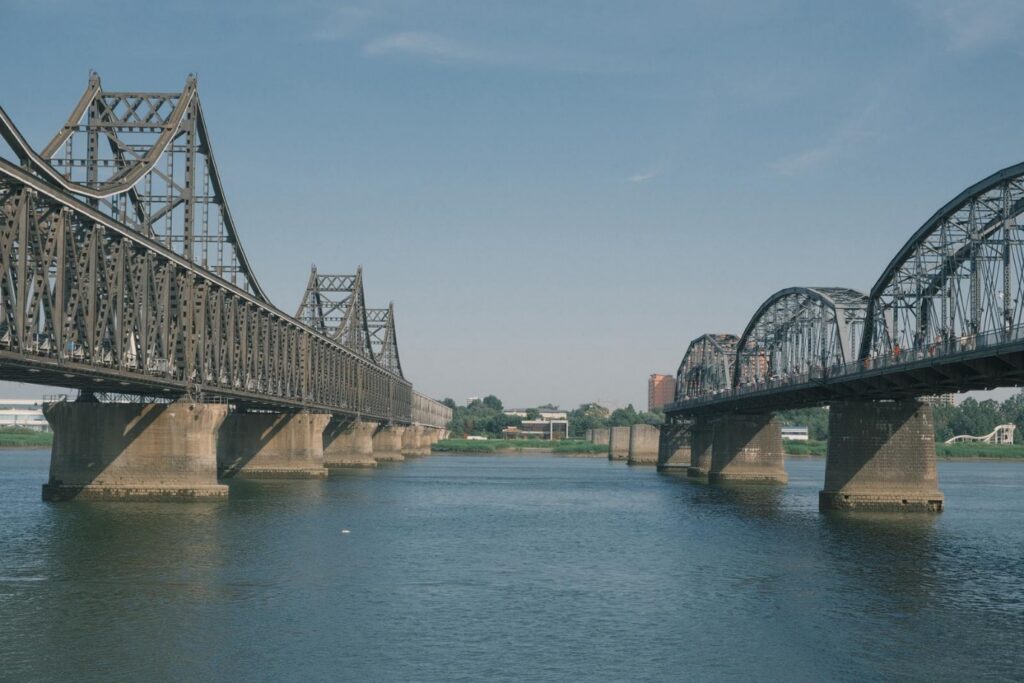
A bridge connects not only two riverbanks, but can also be a political statement. In the Chinese border city of Dandong, three bridges spanning the Yalu River tell a story of war, friendship and shifting power dynamics. While a new bridge between China and North Korea has finally opened after years of delay, two older bridges serve as reminder of the Korean War and the way Beijing deploys the past for political purposes. What do these bridges reveal about China’s historical memory and its changing relationship with its North Korean neighbor? Historian Lennart Jacobs (Leiden University) investigated.
A Chinese – North Korean Celebration
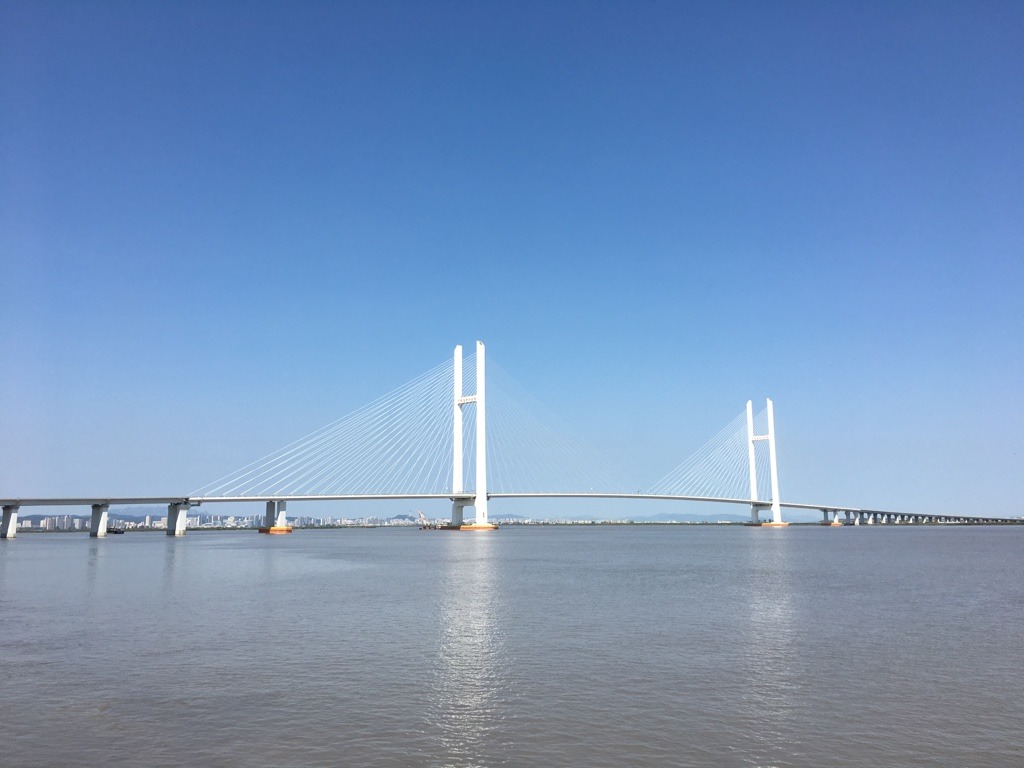
It was party time in Dandong, China’s primary border city with North Korea. The newest connection between the two states could finally be put into use: the Great Yalu River Bridge. Although the structure was completed as early as 2014, North Korea long refused to build a new customs office and highway to link the bridge to to its domestic road network. In 2019, North Korea resumed construction, but work was halted once again due to the COVID-19 pandemic. Recently, the moment finally arrive, and the bridge was opened.
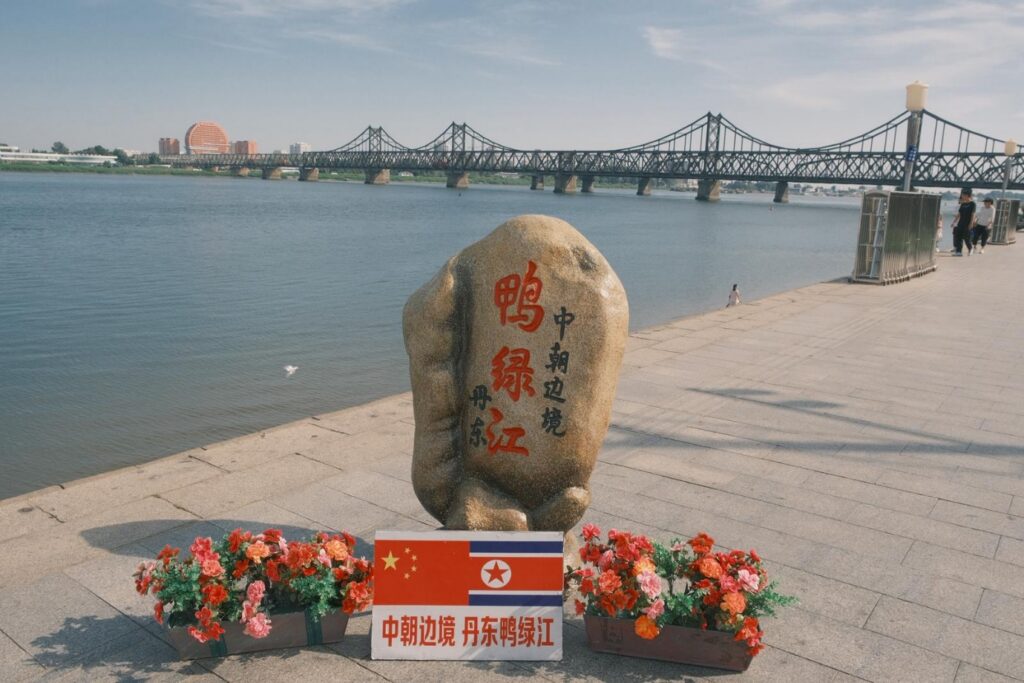
From a historical perspective, it is certainly worthwhile to examine the two older bridges that long served as the primary transport links between China and North Korea; the Broken Bridge and the China-Korea Friendship Bridge.
The History of the Bridges
History is never far away in China. Anyone actively engaged with the country knows the famous adage that Chinese civilization is 5,000 years old. Naturally, the two historic bridges over the Yalu are not quite that old. Although they connect the People’s Republic of China and the Democratic People’s Republic of Korea, they were not built by either off these republics, but by the Empire of Japan.
The southern bridge, completed in 1911, was ultra-modern for its time. Today, it is known as the Broken Bridge and serves as a tourist attraction. For a fee, you can walk across it up to the middle of the river, where the bridge abruptly ends. The northern bridge, built during the Chinese People’s War of Resistance Against Japanese Aggression (1931-1945), is called the China-Korea Friendship Bridge. Until October 15, 2026 – the opening date of the new bridge – it served as the main traffic artery between China and North Korea.
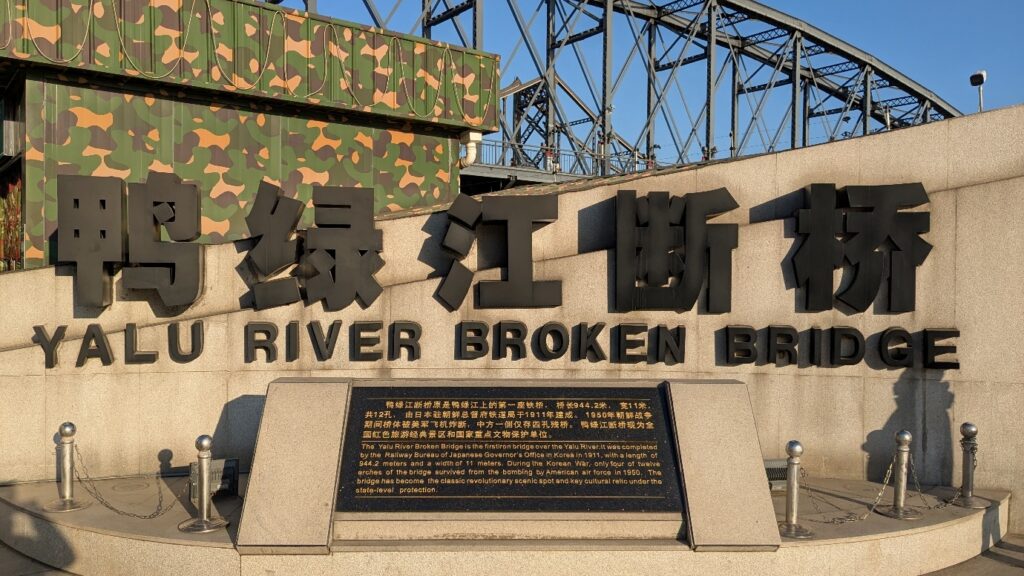
The bridges are famous in China not so much for being built by the Japanese, but for being bombed by the Americans. Indeed, the ‘friendship’ referenced by one of the bridges was forged in the fire of the Korean War (1950-1953). In China, this period is officially known as the War to Resist US Aggression and Aid Korea.
Dandong’s city motto – Heroic City, Heroic People – is a direct reference to this conflict. During this war, both bridges were bombed by the Americans and severely damaged. For the southern 1911 bridge, restoration was impossible, resulting in the Broken Bridge we know today. The larger 1943 bridge could be fully repaired. It was renamed the China-Korea Friendship Bridge to reaffirm the historical, economic, and political ties between the two nations and keep the friendship alive for future generations.
Memory Studies
As a historian, I investigate this phenomenon: how the past is used for contemporary political purposes. The field of study dedicated to this research is called memory studies. Three questions are central to this field: what we remember, what we forget and how we remember and forget. Remembering can take place both individually and collectively, and forms the process through which memories are created. Both memories and the process of remembering are highly subjective; they never provide a perfect reflection of the past, but rather express the needs and interests of the person or group doing the remembering at a given moment.
It is therefore also important to examine who initiates or undergoes this process; This remembering can be shaped top-down by the government, or organized bottom-up. The claim that Chinese history is 5,000 years old and the designation ‘Chinese People’s War of Resistance Against Japanese Aggression’ illustrate how the past is interpreted and deployed to convey contemporary political messages.
Symbols of Reconstruction and Hardship
The two bridges in Dandong are a prime example of this. The Friendship Bridge symbolizes the heroic reconstruction of China and North Korea. The Broken Bridge, by contrast, symbolizes the hardships of the battle. Walking across the bridge and seeing the gap between China and North Korea serves as a reminder of the bombings and the destruction caused by the American enemy.
The city motto of Dandong can be found in multiple locations in the city. On a hill just outside the city center stands a monument complex dedicated to commemorating and studying the Korean War. Its centrerpiece is the Memorial Museum for the War to Resist US Aggression and Aid Korea.
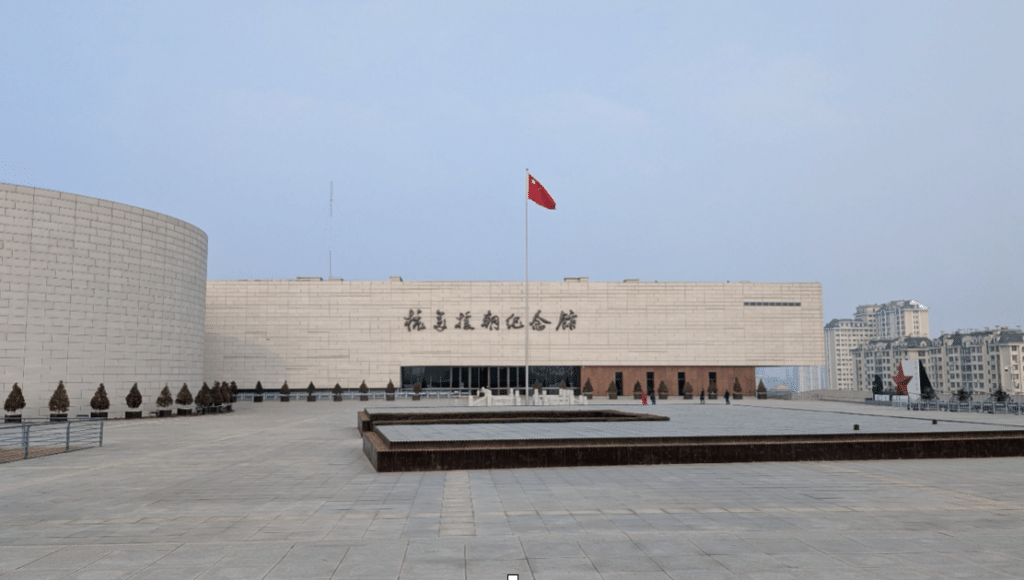
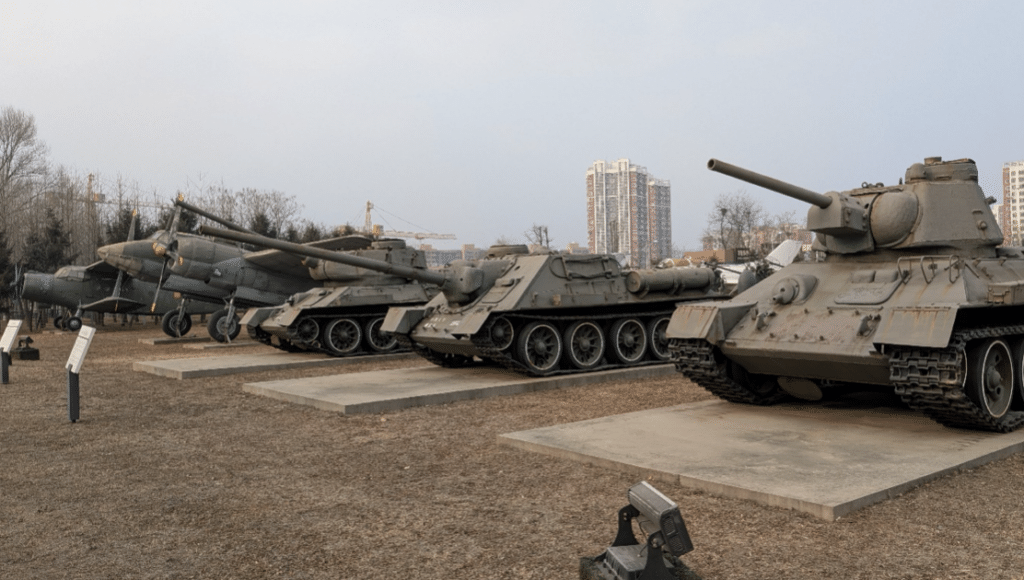
This museum commemorates the victory over America and highlights China’s dual role in the war: on the one hand, the Chinese soldiers who fought in Korea, and on the other, the national mass campaign launched to support and supply the troops. A special room is dedicated to Taiwan. The liberation of the island was supposedly delayed because America was not only the aggressor in Korea, but also protected Taiwan against the Chinese People’s Liberation Army.
Memories of the Korean War Everywhere
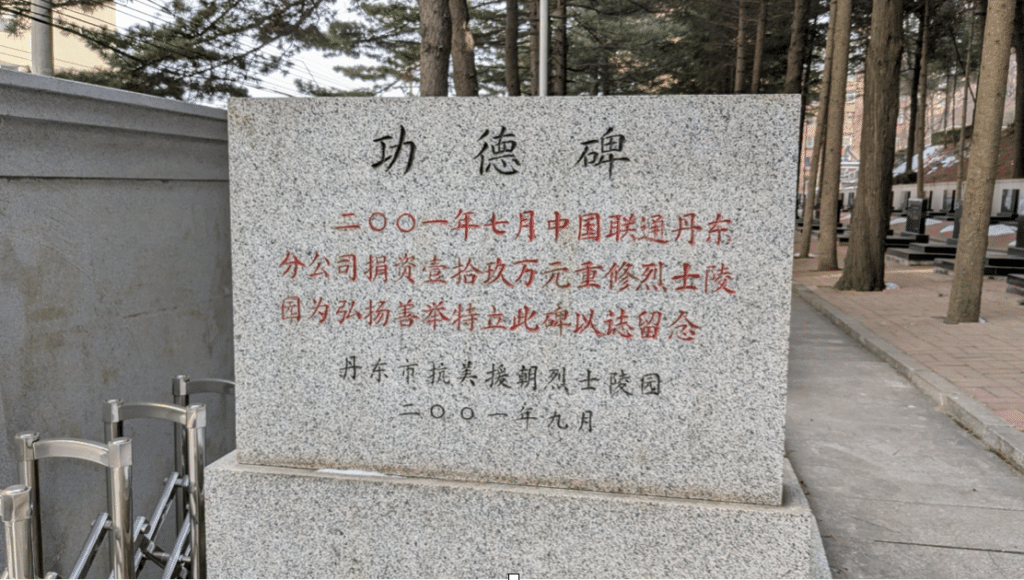
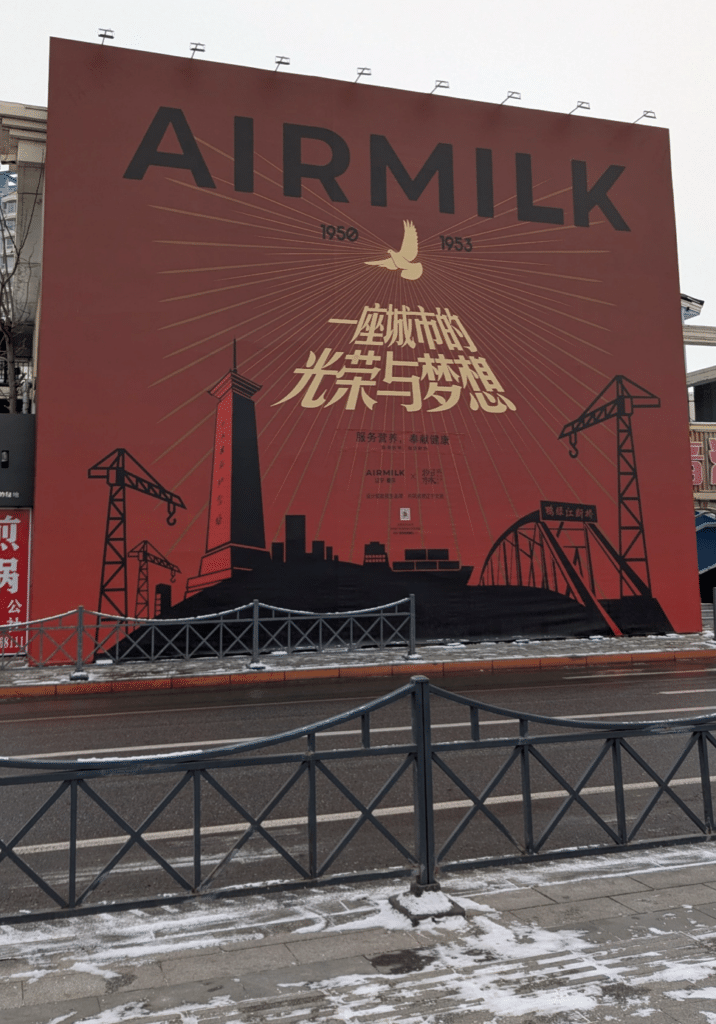
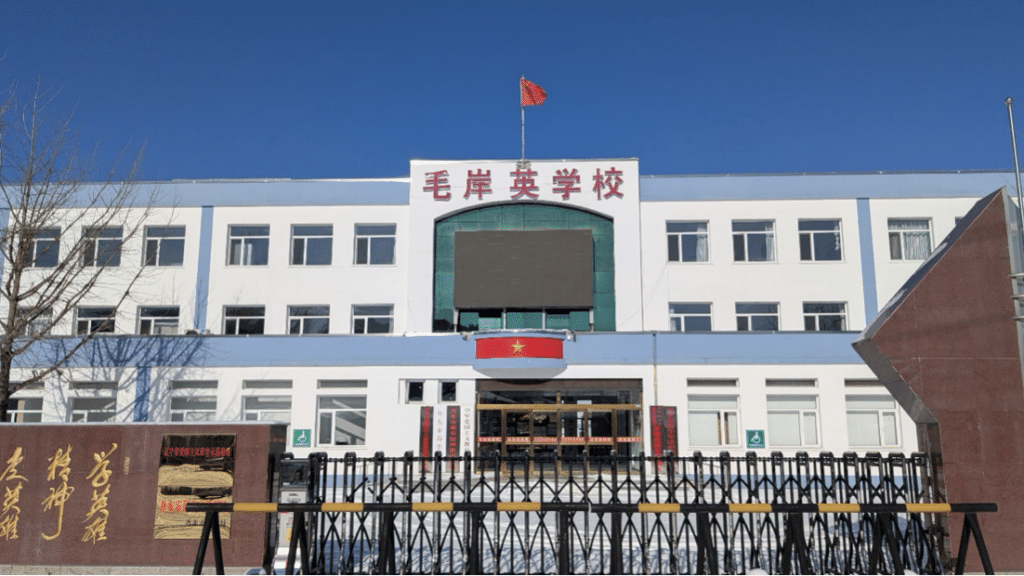
The city contains many more sites and expressions referencing China’s role in the Korean War, ranging from cemeteries and parks to billboards and eateries. For example, a walk along the Yalu River leads through Volunteer Park, honors the Chinese volunteers who fought in Korea. There are multiple military cemeteries for Chinese soldiers who fell during the Korean War, including one sponsored by the state-owned telecommunications company China Unicom. Children attend the Mao Anying primary school, named after Mao Zedong’s son who died in Korea. Even everyday products bear the mark of the war: from Yalu River Beer to Airmilk. Everywhere in the city, the memory of the Korean War lives on.
North Korea’s Changing International Position
But why is the new bridge opening now – after twelve years of delay? Why not earlier or later? To answer that question, we have to look at current international politics. Due to the war in Ukraine, North Korea’s international position is shifting. Pyongyang is supporting Russia in this conflict in exchange for military and economic assistence. China, eager to maintain its influence in North Korea, cannot afford to sit idly by.The opening of the new bridge over the Yalu can bring China and North Korea closer together. China paid for the vast majority of the bridge and ultimately also funded the final stretch of road and the customs office on the North Korean side as well. The bridge is therefore not only an infrastructural project, but also a political instrument to strengthen the bond of friendship between the two countries. But how long will the Great Yalu Bridge bear this name? In the future, much like the older bridges, it may receive a new name to place the past in the service of the present.
Lennart Jacobs is a historian at Leiden University. He lectures on East Asian history and politics and is currently working on a PhD on the transnational remembrance of Dutch Korean War veterans in the Netherlands, South Korea and China.
(photos: by Lennart Jacobs)