by Jaap Post
If you have been a member of VNC for some time, you undoubtedly still have a pile of magazines lying around, the China NU. A beautiful magazine, in which a wealth of information can be found. For ChinaNU+, Jaap Post reads them all again in the run-up to the magazine’s 50th anniversary and makes a very readable summary of them. In this issue we continue with volumes 36 to 40, the period 2011-2015.
China to invest abroad
At the end of the last millennium and even more so in the first decade of this century, China is becoming an increasingly important player on the world market. Accession to the World Trade Organisation (WTO) in 2001 gives an extra boost to this. Investments by Western companies in China have also strongly boosted Chinese exports. Partly due to growing exports, China is now the second largest economy in the world. This position makes it possible to invest abroad yourself, for example by taking over companies and setting up new companies. China NU reports that between 2003 and 2009, foreign direct investment grew from less than three billion dollars to more than 56 billion dollars. China’s share of global foreign direct investment will increase from a mere 0.45% to 5.1% mainly because of this. China is thus advancing to fifth place in the ranking of foreign investors. The majority of these investments go to countries in Asia, Latin America and the Middle East. In 2009, the share of Europe and Africa is still limited: no more than 4% of the total.
China Nu discusses the great influence of the government on the nature and destination of China’s investments abroad. This is particularly true of the main state-owned enterprises, whose directors are appointed by the Communist Party. But the private companies also have close ties with the Chinese government. For other countries, it is difficult to estimate the background of Chinese investments, because there is usually little information about the exact relationship between the companies and the Chinese government.
The US and China consider each other potential enemies. European companies with large interests in the US market will therefore be reluctant to share technology with Chinese companies for fear of being excluded in the US. And European governments will not want companies to be taken over if this puts pressure on their relations with the US: “As China’s investment in Europe increases, so will the need for European governments to pursue policies that take into account both the economic and political aspects of those investments.” How current can an old China be now?
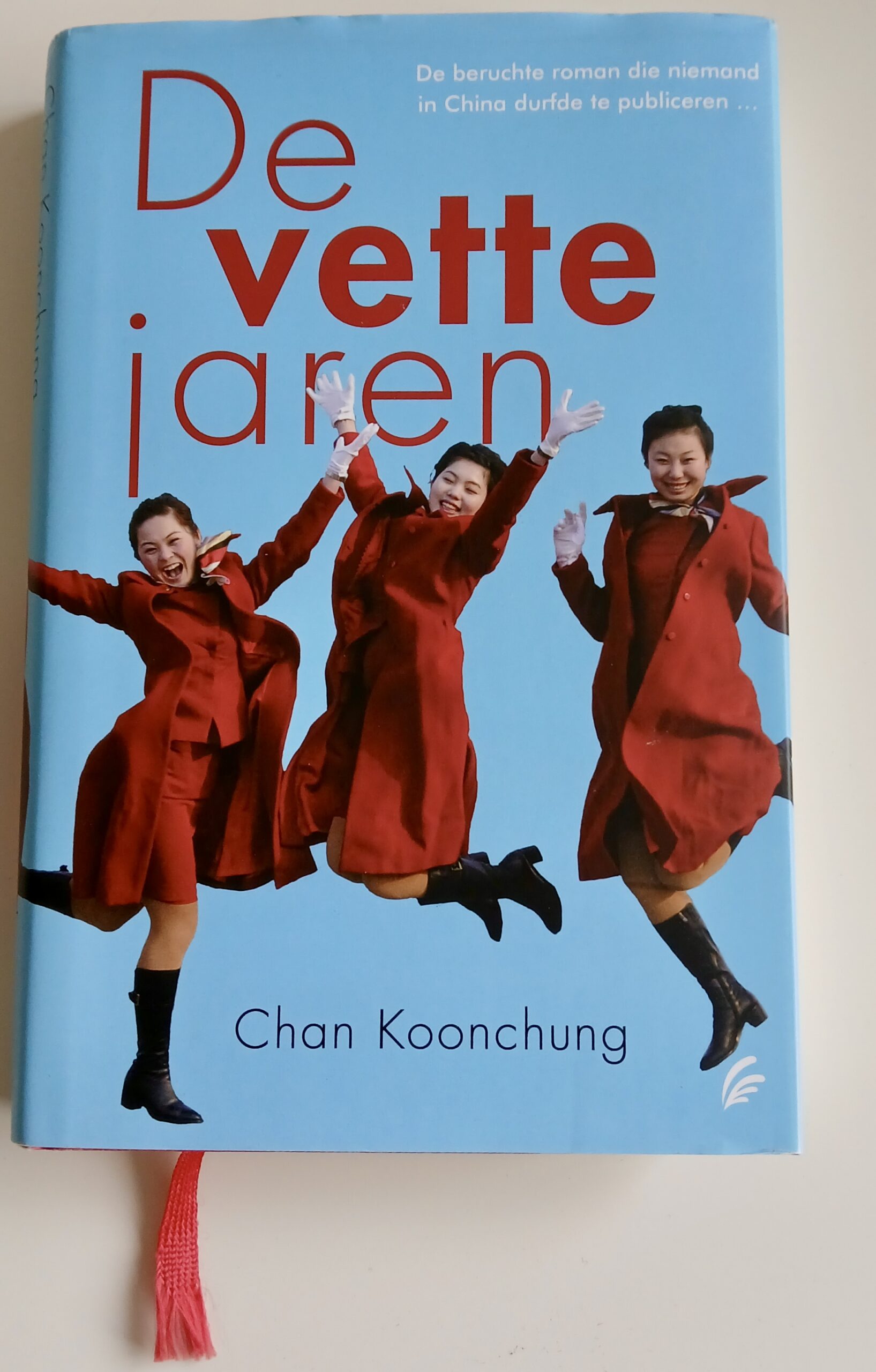
Fat years
With the growing prosperity, art is also flourishing more and more, both in words and in images. China Nu pays a lot of attention to it, and critical artists and their work are not forgotten. For example, articles are published about visual artist Ai Weiwei and author Chan Koonchung. Artists who are more known abroad than in China itself due to the censorship of the Chinese government. “In his fascinating science fiction-like novel The Fat Years,” writes China Now, “Chan Koonchung holds up a confrontational mirror to the reader about the great influence that government censorship exerts on Chinese society.” The book is about one month that is missing from the collective memory of most Chinese and the golden or fat years that follow. In the first week of that month, a global economic crisis breaks out that leads to chaos and such great unrest that the Chinese people are eagerly awaiting the declaration of a state of emergency by the government. In the three weeks that followed, the army restored order through harsh intervention. In the years that followed, those twenty-eight days were hardly mentioned in the press and on the internet, everyone had their eyes on the future and was too busy earning and spending money. For the Propaganda Department, this was a reason to make that month disappear completely from the media and from the internet. The conclusion of the book is that the government and the people are condemned to each other. When a totalitarian regime is accompanied by abundant consumption, it is no problem for most Chinese to have only ninety percent of the freedom possible. “But,” says Koonchung, “the Chinese intellectuals owe it to themselves not to forget the ten percent lack of freedom. They have a duty to remind the Chinese people of history.”
Social media and censorship
During the Arab Spring, social media such as Facebook and Youtube played a successful role in the various uprisings and revolutions. This was possible because the authorities had no control over these services. This would be unthinkable in China. For example, China Nu writes that when the internet came in the first half of the 1990s, the Communist Party immediately recognized that in addition to the great advantages of this new technology for the economy, there were also possible dangers for state security. It was also pointed out abroad that the internet could become a crowbar for more democracy in China. To contain these dangers, the Chinese government came up with a variant of the Great Wall of China: the “Great Firewall”. As a result, the Chinese population was almost completely cut off from digital Western social media. At the same time, variants or clones of Western social media were developed for Chinese use that the government can supervise. For example, ‘Renren’ is the Chinese version of Facebook, ‘Weibo’ is the Chinese version of Twitter (now X) and ‘Youku’ is the version of YouTube. This oversight, together with the ‘Great Firewall’, is appropriately called the ‘Golden Shield’ and falls under the responsibility of the Ministry of Public Security. In addition, other departments and many regional authorities also have their own systems to monitor the internet and, if necessary, censor it. Incidentally, censorship is sometimes also selective and criticism of local and local governments is not censored. It therefore happens that due to massive criticism expressed on the internet, local administrators have to leave the field. The importance of this ‘Golden Shield’ is evident from the fact that in 2013 there were already almost 600 million internet users in China. Many internet users don’t seem to care about the censorship, because they simply don’t realize that censors have intervened.
Leadership change
In November 2012, XI Jinping succeeded Hu Jintao as General Secretary of the Communist Party. For China Nu important enough to publish an article about this in the winter issue of 2012 with some cautious expectations about the new leadership. In America, Obama has just been re-elected. Xi Jinping, then 59 years old, had already been part of the nine-member Standing Committee of the Politburo under the leadership of Hu Jintao for a number of years. Over time, significant changes have taken place, enormous personal power has given way to shared power and consensus. It is recalled that changes of power are increasingly institutionalized. Especially since Hu Jintao came to power in 2003, changes of power are more orderly. A retirement age of 67 has been introduced, as a result of which seven of the nine members of the Politburo will resign in 2012. It has also been agreed that a president may serve a maximum of two five-year terms. It is expected that under the new shared leadership, the preservation of domestic stability will be a priority. Economic growth and tackling corruption play an important role in this. For example, Xi Jinping has emphasized that free market forces and entrepreneurship are important. The fight against corruption will not be an easy task because it is also widespread at the top level. The political course is not expected to see any significant changes. However, there are huge complaints on the internet and there are increasingly massive demonstrations against government action and environmental pollution. The new leaders will have to take this into account. Policy adjustments that go beyond treating the symptoms seem inevitable. What policy changes this will lead to remains uncertain. We are now thirteen years later and we know how it went on and we have seen the literal and physical removal from the scene of Xi’s predecessor.
“You can’t change China………”
With China’s strong economic growth, contacts between the Netherlands and China are increasing in many areas. For example, there are exhibitions of Chinese art, tourism is increasing sharply, the number of Chinese students in the Netherlands is growing, Dutch advisors are going to China, etc. China NU writes about it. Through all those contacts you influence each other. Sometimes these contacts are of a long-term nature. Architect John van de Water, for example, has been living in China for many years. He experiences a “Chinese desire for innovation” but also sees all kinds of differences with the Netherlands. For example, people work much faster than in the Netherlands and buildings are made for ten years or less. This may well result in a building that is less successful. A Chinese colleague of his remarks in this regard: “The present is but a small moment in the sea of eternity that characterizes Chinese culture”. After all these years in China, van de Water concludes that “You can’t change China, but China changes you”.