A Personal Account
by Ziying Wu
The Chinese graphic design landscape is undergoing a meteoric evolution. Caught between the commercial pressures of a hyper-dynamic domestic market and the restrained traditions of the European design world, Ziying Wu – who is intimately familiar with both markets – searched for her own identity. This is aA personal account of a sector in transition.
A reality check
As a designer, I stand right in the middle of an industry that is forced to reinvent itself at breakneck speed. When I graduated from the School of Visual Arts in New York and started working at a young studio with a team of just five designers, I was immediately confronted with reality. The intense workload and fast-paced decision-making forcefully pulled me out of my academic comfort zone and threw me straight into the commercial design world.
Later, during my year at the renowned studio thonik in the Netherlands, I witnessed for the first time how a mature European agency operates. It opened my eyes to the deep chasm between the Chinese and European design landscapes. Until just overlittle more than a decade ago, graphic design was not widely understood by the general public in China;, itand was often associated with advertising and product packaging.
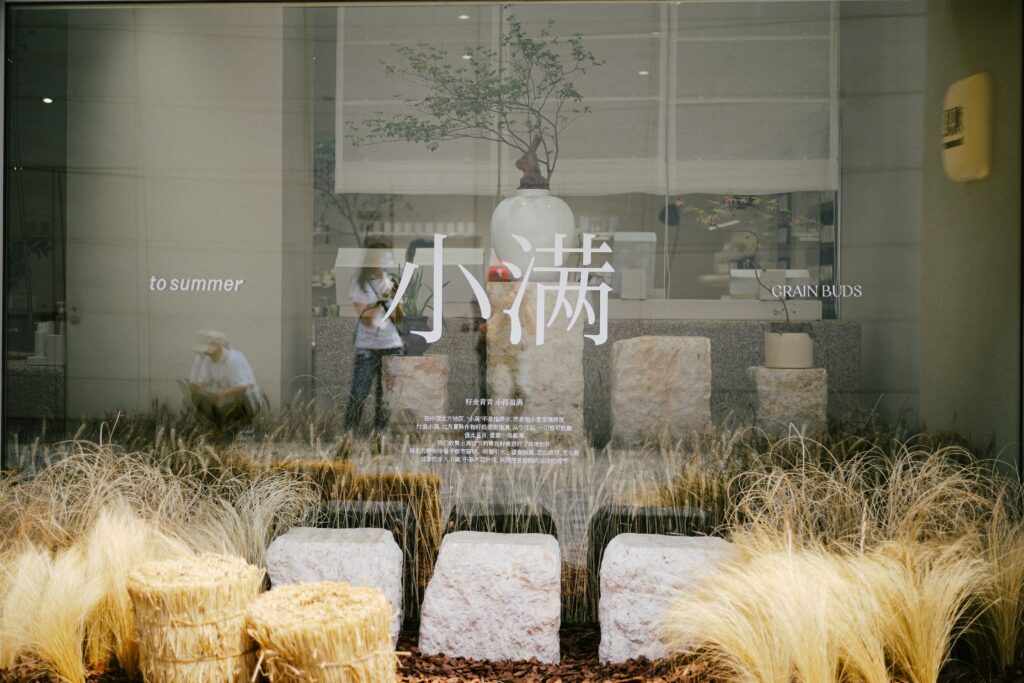
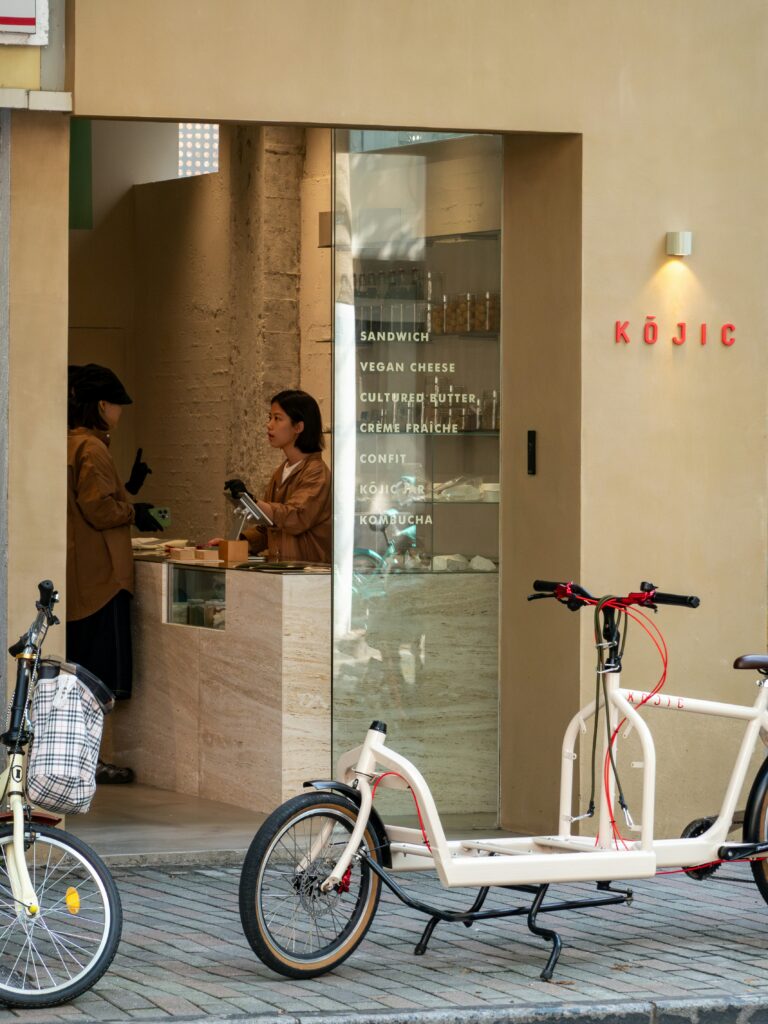
That changed radically during my college years with the rise of what became known as the ‘New Consumer’ trend. A wave of young design studios redefined the visual identity of emerging brands with a clean, direct, and visually spectacular aesthetic.
At the same time, I saw a generation of foreign-educated designers return home. Armed with influences from Europe, the US, and Japan, they gave the city streets a complete makeover. Cafés, fashion labels, and cosmetics brands suddenly acquired international allure.
Playful and Bold
From my perspective, contemporary Chinese visual language is best described as young, playful, bold, and thoroughly commercial. Because we are not burdened by a heavy historical tradition, our design possesses a certain rawness and unprecedented freedom. Trends are absorbed and localized at a killer pace, even if the results are not always fully refined. That said, I still see beautiful, subtle traces of traditional Chinese aesthetics in book and packaging design.
Yet, in recent years, I have also noticed a clear downside: an increasing homogenization. Successful styles are copied so quickly that they turn into formulas. Furthermore, I observe a sharp polarization. While the trendy consumer market has millions to spare for a strong identity, everyday commercial design still seems stuck in the visual language of twenty years ago.
In many ways, I believe China is currently experiencing the kind of design boom that Japan went through decades ago: an industry in a permanent state of evolution. The big difference is consistency. While the standard of public design in Japan is consistently high everywhere, that is not yet the case in China.
European Restraint versus Asian Unpredictability
The gap with Europe is perhaps even wider. Where Asian markets – including South Korea and Thailand – prioritize communication speed and competitiveness, European design leans on a long history.
To me, the defining characteristic of European design is ‘restraint’. The emphasis lies on context, content, and the reading experience, rather than on purely visual effects. It exudes a sense of calm shaped by centuries of historical accumulation.
Interestingly, I experience a mutual fascination. We, as Asian designers, are drawn to the rationality and structured systems of the European tradition. European designers, in turn, are fascinated by our unpredictability. A Swiss designer once captured this perfectly in a conversation with me: “I love how Chinese design sometimes feels chaotic, but somehow still makes sense.” He appreciated those strange, visually compelling moments that work despite breaking the rules. In his view, Swiss design can sometimes become too reductive, where the pursuit of minimalism begins to strip away the visual pleasure of design itself.
Hopping from Studio to Studio
These cultural differences translate directly to the studio floor. In Europe, I noticed that the design process allows room for deep-dive research and experimentation. In China, the market dictates a punishing pace with extremely compressed timelines. Furthermore, the relationship between client and studio in China is often less balanced. Clients often make many of the key decisions, leaving designers with less creative freedom.
During my time at thonik I worked on long-term projects for cultural institutions such as Museum Boijmans Van Beuningen, Museum Arnhem, and Hong Kong’s M+. This kind of sustained relationship is still rare in China. Brands frequently hop from studio to studio, always chasing the latest visual trend. Without a coherent visual language, building a lasting brand identity remains a major challenge there.
Price Wars
This places enormous pressure on my generation. Many young Chinese designers – particularly in the niche of type design – carry a heavy sense of social responsibility. Many of us feel it as a personal mission to push the entire field forward single-handedly.
Lately, that idealistic passion has been clashing hard with economic reality. Since the pandemic, design fees in China have plummeted drastically. Competition has become so cutthroat that studios are locked in fierce price wars simply to survive, which obviously does not benefit our creative climate.
Time for Contemplation
Despite these growing pains, I still find the transformation of Chinese graphic design astonishing. We have left the phase of pure, rapid expansion behind and entered a more contemplative stage. We are beginning to critically reflect on what the next step should be.
I remain optimistic that as our market continues to mature, this tempestuous visual energy will stabilize into a unique, distinctive identity. In doing so, I hope that we as designers will gradually gain greater professional respect and creative autonomy.
Ziying Wu is a graphic designer based in Beijing. After studying at the School of Visual Arts, she worked at The Pin Projects in Beijing and studio thonik in Amsterdam. Her practice focuses on brand identity and editorial design, with a growing focus on type design, which she will continue to develop at ECAL in Lausanne. Drawing from experiences across different cultural contexts, her work explores the relationship between language, typography, and visual communication..