by Hildegard Regnerij
In this article, Hildegard talks about her experience as an exchange student at Tsinghua University in Beijing February – June 2025
Tsinghua is regarded as the best university in Asia and is not only very prestigious but also a very internationally oriented research university with 22 schools and 59 departments with faculties in -among others- technology, humanities, law, medicine, history, philosophy, economics, management, education and art. As an exchange student, you put together a package of all these interesting study topics yourself. There are more than 62,000 students (bachelor, doctoral and post-doc) of which 4000 are international students , a city in itself.
Studying, living and relaxing, everything takes place on and around the huge campus. There is a supermarket, several canteens, sports fields and parks, there is even a museum. In addition to the study, there is plenty of opportunity to play sports, learn the language and culture, make cultural trips and excursions to companies.
Stimulating environment
Hildegard notices that the university world is doing a lot to get the best out of the students. In addition to attending lectures and writing papers and scientific proposals, there are plenty of opportunities to participate in research and collaborate with PhD students. She found it fascinating to see how the university, both professors and students, encourage each other to do groundbreaking research in the field of science. For example, there are weekly guest lectures by important professors and scientists, where there is time afterwards to further exchange ideas and network with the speakers. This creates a stronger interest in scientific research, offers opportunities for networking, and creates space for innovation and development.
Relationship between the Netherlands and China
Hildegard notices that there is a good relationship between China and the Netherlands in the field of scientific research. She attended several guest lectures on neuroscience, where collaborative projects with Dutch professors and students were discussed. There are also several Dutch professors and students working at Tsinghua and there are many partnerships with Dutch universities. She took a course on cultural connections between China and Europe with Professor Rens Krijgsman and an interesting tour of the architecture faculty by Professor Martijn de Geus. She also met people at companies who had been on exchange in the Netherlands. She herself has now been able to help friends who wanted to study in China by putting them in touch with the right local connections.
Study in Chinese
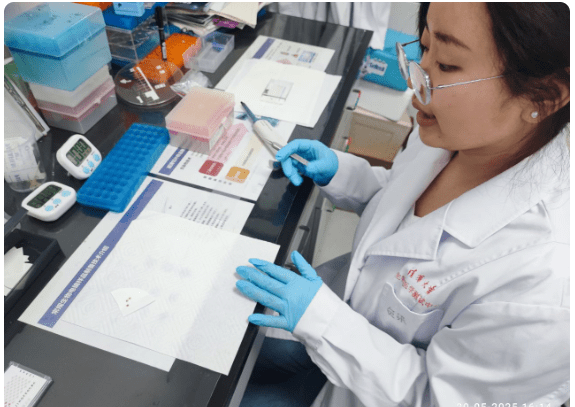
The exchange is for six months and the choice of subjects is huge. Most courses are taught in English, but Hildegard has also taken two courses in Chinese. With only basic knowledge of Mandarin, that was quite a challenge. Fortunately, there are several translation tools available. She found it interesting to try and very educational, also to see how local students are taught. These lessons would be more difficult and groundbreaking. An element that plays a role in this is competition. B In the course ‘Basic principles and applications of 3D visualization technology’, Hildegard reached the top three with ‘Best Idea’. Her idea had to do with making the C-arm (an X-ray machine in the shape of a C) more user-friendly.
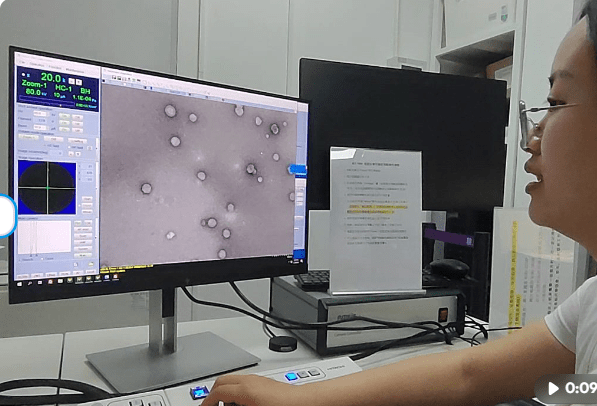
She also took the course ‘3D cryo-electron microscopy in structural biology’ in Chinese, where chloroplasts (chloroplasts) are photographed and mapped at the nanoscale with high-tech microscopes. Later, Hildegard was allowed to participate in the research with the cryo-EM and see the machine in operation. There are only two laboratories in the whole of China where this is possible.
Biomaterials
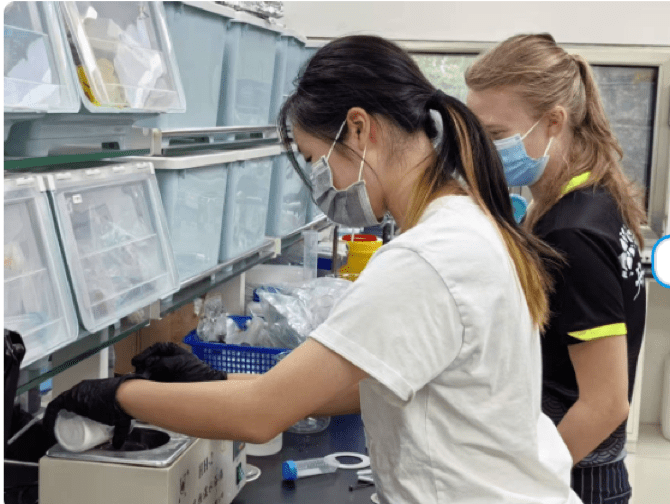
Hildegard took other subjects in English. In addition, ‘ Biomaterials’ one of her favorites. Topics such as how the immune system deals with biomaterials, tissue engineering, cancer treatment and nanoengineering were discussed. For example, research is being conducted into innovative therapies for rheumatism (arthritis), in which a hydrogel combined with nanoparticles – which respond to electronic waves generated by ultrasound – can repair the cartilage wall in the knee. This makes the inflammation in the cavity with fluid between the kneecaps disappear. During this research, Hildegard was able to shadow a PhD student. Within this field, there is also cooperation with Dutch universities.
The Tree of Life Poem
Hildegard shows how diverse an exchange study half-year can be in the illustrated poem she wrote for a poetry competition for Tsinghua’s 100th anniversary using translator tools. It describes how cooperation between different universities has enriched Tsinghua and how it is built on the shoulders of older professors. The fruits refer to eternal wisdom, the branches spread out into the future, the trunk stands upright in the present and the roots anchor the past. Because the roots correspond to the past, that part is written in ancient Chinese, in a vertical way. In addition to hard science, there is also a focus on fantasy and self-expression, and on delving into the beautiful culture and history of China.

Back in the Netherlands
Since July of this year, Hildegard has been back in the Netherlands and looks back on a super interesting time in Beijing. Both academically and personally, it is an enormous enrichment for her to have studied at Tsinghua. She has learned a lot and gained many ideas about what next steps in her studies and future work she will take. For the time being, she is thinking of regenerative medicine, bioengineering, fields that she has already had a taste of in China and would now like to continue with.