Sunzi’s book The Art of War is “essentially a plea for caution”
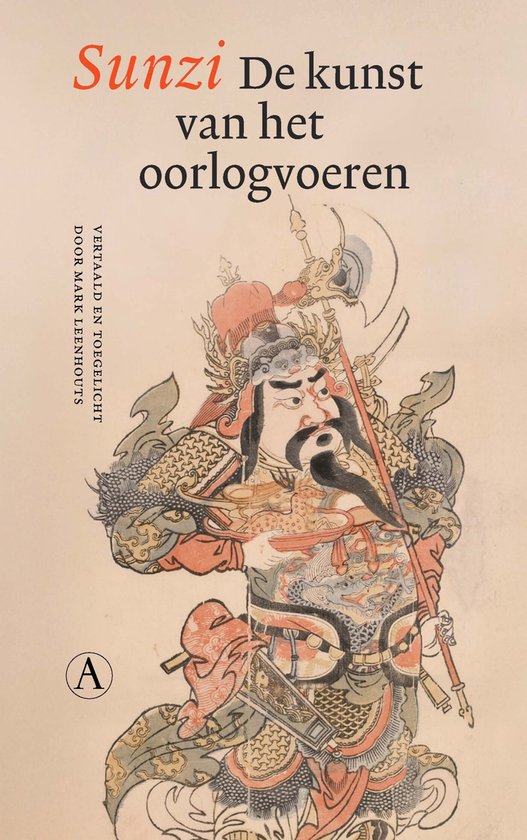
The launch of the new Dutch translation of “孙子兵法 (Sūnzǐ Bīngfǎ) – the classic by Sunzi, translated by sinologist and renowned translator Mark Leenhouts (“De kunst van het oorlogvoeren“) – on March 19 sparked a rich discussion on the significance of Sunzi’s thought in a world currently facing a resurgence of conflict.
The well-attended event was organized by VNC and the Leiden Asia Centre (LAC). Joining Mark Leenhouts as guest speakers were: Frans Osinga, Professor of War Studies at Leiden University and former Commodore, and Frans-Paul van der Putten, China expert and geopolitical analyst affiliated with LAC and Clingendael. The session was moderated by Floris Harm, Director of LAC and opened by VNC Chair Monique Knapen.
Leenhouts began with an introduction to his new work, which marks the first time the text has been translated directly from Chinese into Dutch. According to him, the text is less a military handbook and more a philosophical manuscript:
“The Art of War is essentially a plea for caution: war is a matter of life and death and must be approached with utmost care.”
He emphasized that the original book is likely not a work of a single author, but rather a concentrated form of collective wisdom that evolved over centuries.
In China, Sunzi is not read solely through a militarily lens but seen as ‘general wisdom’ applicable in diverse contexts, from politics to daily life.
Three Core Principles: Deception, Power, and Form
Leenhouts highlighted three central principles that permeate the entire work:
- Deception: Strategy is about influencing the opponent’s perception
- Invincibility: First strengthen yourself, then act
- Form: Making visible what you want to show – and, above all, hiding what is real
As he summarized:
“True warriors first make themselves invincible and then wait for the enemy’s vulnerability.”
These principles show that effective strategy does not begin with action, but with preparation, patience, and insight.
In other words: Sunzi’s book is not about combat, but about avoiding it.
Growing Stronger Without Waging Direct War
During the panel discussion, the bridge was built to current events. Frans-Paul van der Putten explicitly placed Sunzi within the framework of China’s long-term strategy:
“For nearly 200 years.China has been trying to find a way to become stronger without waging direct war.”
He emphasized that Sunzi’s thinking is less about how to wage war, and primarily about when and whether one should do so at all.
This aligns with a broader observation from the session: China patiently builds power and avoids direct confrontation as long as it remains strategically advantageous.
Sunzi and Modern Military Science
Frans Osinga underlined that Sunzi still plays an important role in military training, both in Europe and in the United States:
“Sun Tzu is still taught – not always in its entirety, but the concepts are deeply embedded in strategic thinking.”
He pointed out that the work, like that of Von Clausewitz, belongs to the rare category of ‘general strategic theory’: timeless insights that transcend different eras and technologies.
Notably, Sunzi warns against war’ a bloody victory can ultimately result in strategic loss if it undermines society – an insight that remains relevant today.
Deep Knowledge of China is Urgently Needed
A recurring theme in the discussion was the lack of in-depth knowledge about China in the Netherlands and Europe.
Both the speakers and the audience emphasized that this poses a strategic risk:
“The Netherlands must adjust its self-image. Knowledge about China is essential.”
The shifting geopolitical reality – marked by increasing power competition and hybrid forms of conflict – requires a better understanding of strategy, culture and long-term thinking.
The core lesson of the evening was aptly summarized in one of Sunzi’s most famous principles:
“Know the other and know yourself – then in a hundred battles you need not fear .”
In a world where geopolitics, technology, and economics are becoming increasingly intertwined, that lesson is more relevant than ever.
Through this event, VNC, in partnership with the Leiden Asia Centre, demonstrated how historical insights can contribute to understanding contemporary developments. The combination of literature, strategy, and geopolitics resulted in an afternoon that was not only very well-attended, but also both profound and timely.

The panel, with from left to right: Frans Osinga, Frans-Paul van der Putten, Mark Leenhouts and Floris Harm.

VNC Chair Monique Knapen opened the meeting
The book – De kunst van het oorlogvoeren – the first translation directly from Chinese into Dutch, by Mark Leenhouts. Published by Athenaeum, 2025